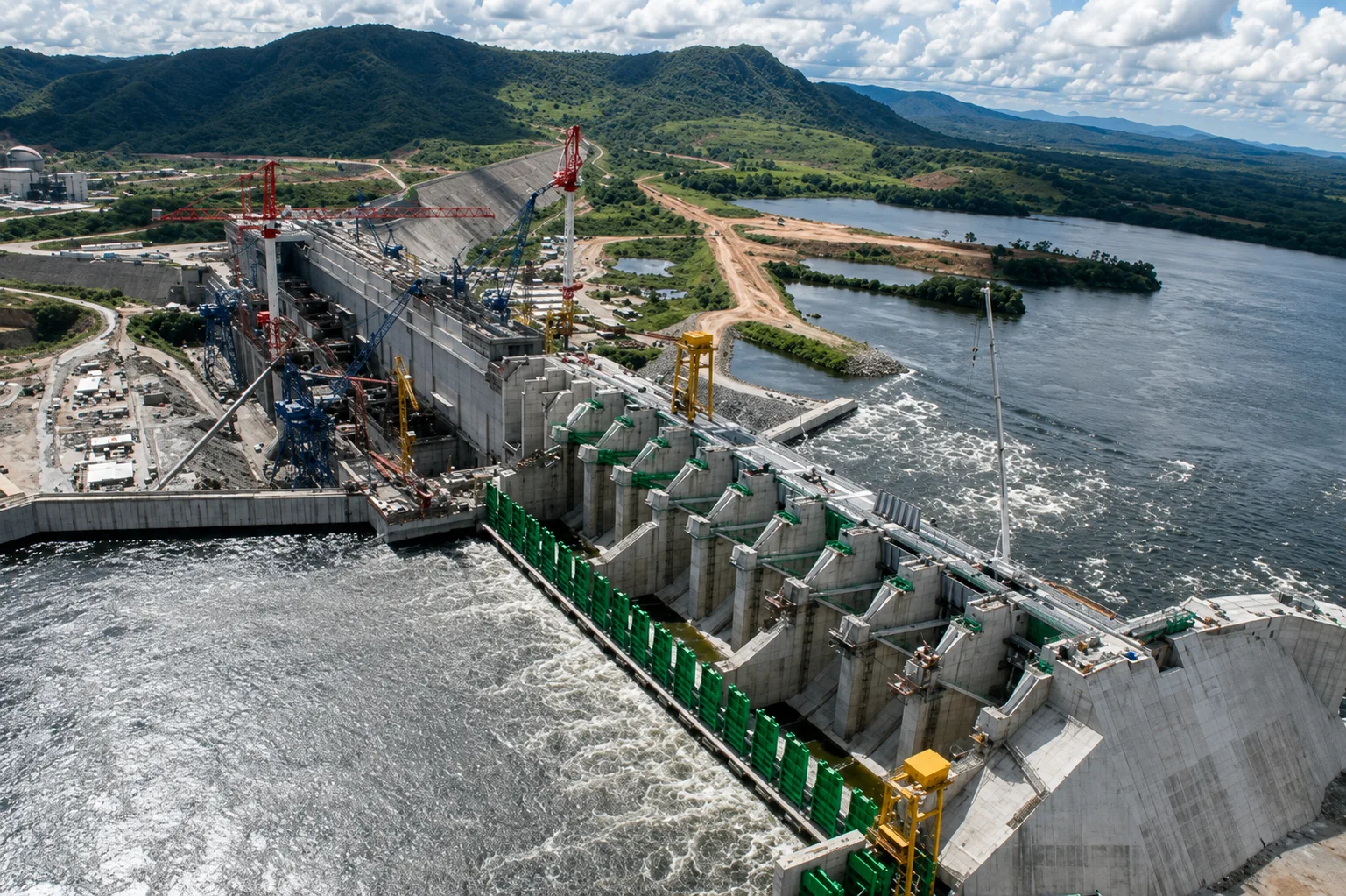
The Manuel Piar Hydroelectric Plant — widely known by its site, Tocoma — is the fourth and final development on the lower Caroní River, roughly 15 km downstream of Guri, in Bolívar State, Venezuela. Its design comprises ten Kaplan units of 216 MW each (2,160 MW installed). On a project of this scale, the process-valve system is critical infrastructure: it isolates, regulates and protects the water circuits across the entire powerhouse. ACD America Corp executed the largest process-valve contract of the project, with a scope spanning valves from 1" to 36", including trunnion ball valves hardfaced with tungsten carbide and Alloy 6 for the most demanding service.
The project and ACD's role
The contract was awarded by Consorcio OIV-Tocoma, with Corpoelec/Edelca as the end user and its engineering as the inspection authority. ACD acted as the technical representative of the valve manufacturers Datian, ZYI Xuanda and Crane, integrating each of them with the project specification, the consortium's detail engineering and the client's inspection.
The engineering of the supply was directed in-house by Enrique Rojas, Founder & CEO of ACD — from the specification and material selection to the relationship with the represented factories and the technical interface with the engineering of Consorcio OIV-Tocoma and Corpoelec/Edelca.
Why the Caroní River drives the valve design
Before specifying a single valve, you have to understand the medium. Tocoma's service water imposes four simultaneous demands: suspended solids that abrade and erode balls, seats and sealing surfaces; permanent immersion and tropical humidity that drive corrosion; the need for bubble-tight (Class VI, 0% leakage) isolation to maintain and isolate circuits; and long maintenance intervals, because access to some lines is difficult and every component must last for years.
The challenge, therefore, is not "a valve": it is the compatibility between type, material, coating and service in each circuit. That is the engineering behind the supply.
Supply scope: the right factory for each valve type
ACD sized the package by valve family and service, backing each one with the most suitable represented factory — rather than sourcing everything from a single generic supplier. That multi-factory integration under one specification is a central part of the engineering value of the supply.
| Valve family | Technical attributes | Represented factory | Function in the plant |
|---|---|---|---|
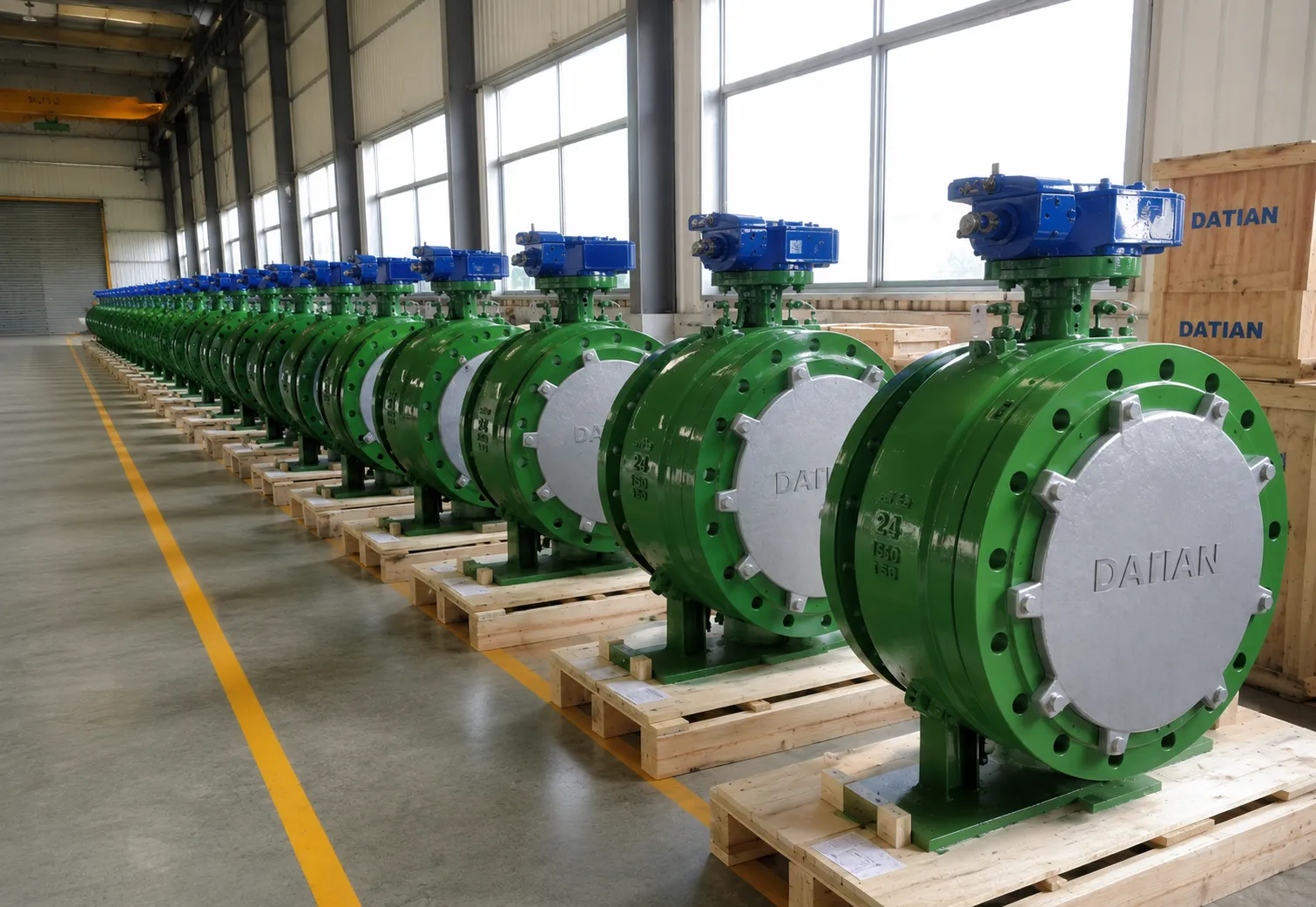
| Trunnion ball valves (up to 24"–36") | Trunnion-mounted ball, tungsten-carbide + Alloy 6 hardfacing, steel body, metal seat, gearbox operation | Datian | Isolation in abrasive raw-water service |
| Resilient-seated butterfly valves (up to 36") | Buna-N (NBR) seat, Class VI (0% leakage) shutoff, stainless-steel stem and disc, manual/pneumatic actuation | ZYI Xuanda | Regulation and isolation in water circuits |
| Gate valves | Cast carbon-steel body, Class 150, designed and tested to API / ASME / ISO standards | Datian | Blocking in water process lines |
| Auxiliary valves (from 1") | Bronze gate / globe / check for small lines | Crane | Auxiliary services and instrumentation |
The technical highlight: tungsten carbide and Alloy 6 hardfacing
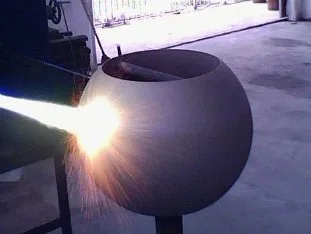
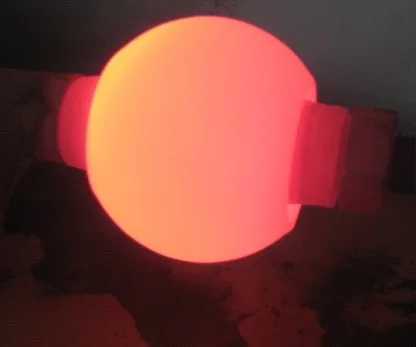
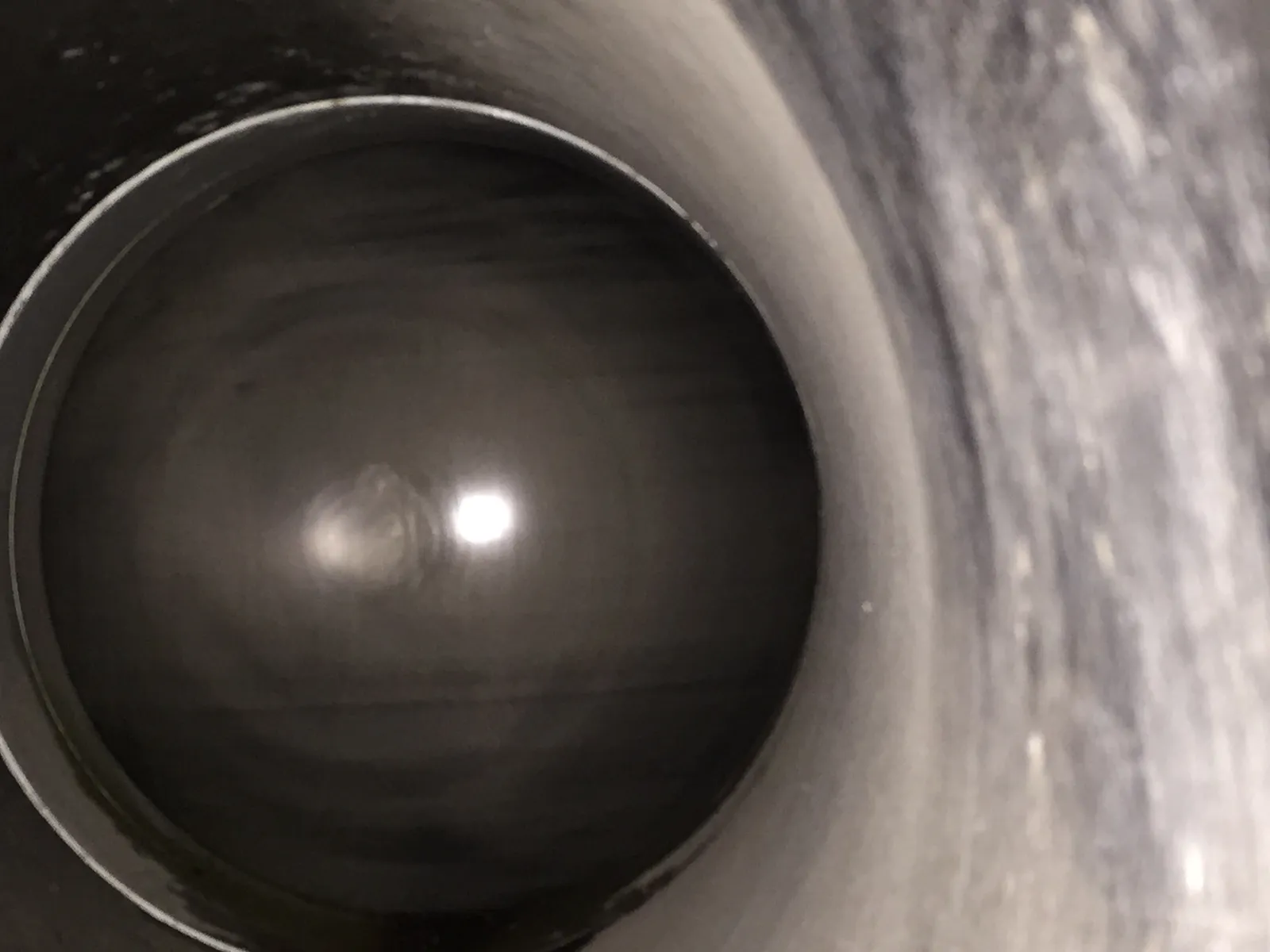
The most critical point in sediment-laden service is erosion of the sealing surfaces. On the trunnion ball valves, ACD took durability beyond the minimum requirement: it hardfaced the ball with tungsten carbide and Alloy 6 (a Stellite-type hard alloy) by thermal spray, instead of the standard ion-nitrided ball.
| Sealing-surface attribute | Tungsten carbide / Alloy 6 hardfacing | Standard ion-nitrided ball |
|---|---|---|
| Hardfacing thickness | 200 µm | 150 µm |
| Surface hardness | ≥ 60 HRC | ~40 HRC |
| Wear resistance | 100,000 cycles | 30,000 cycles |
| Estimated service life | 5–7 years | ~3 years |
Surface protection engineered for Caroní water
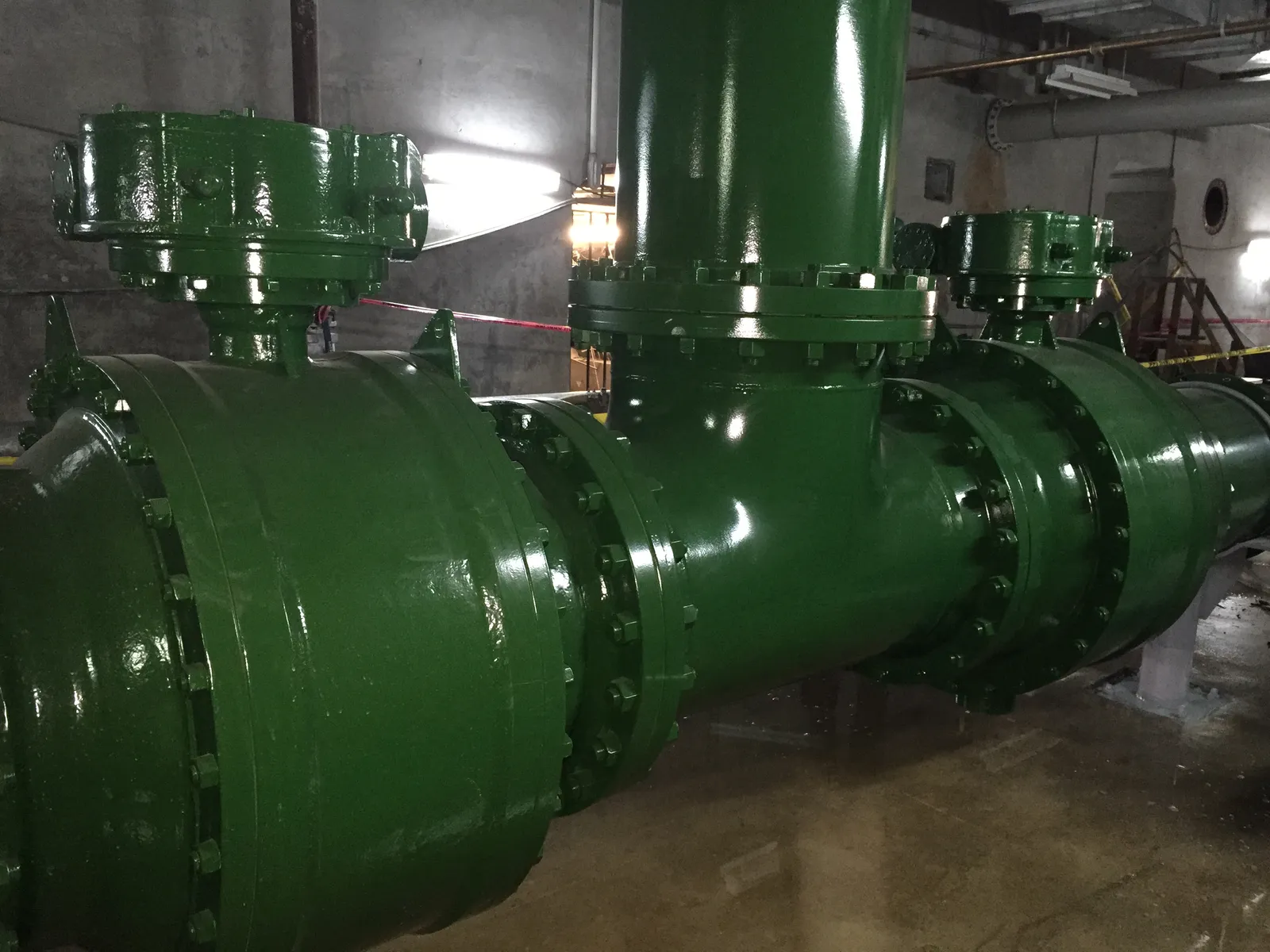
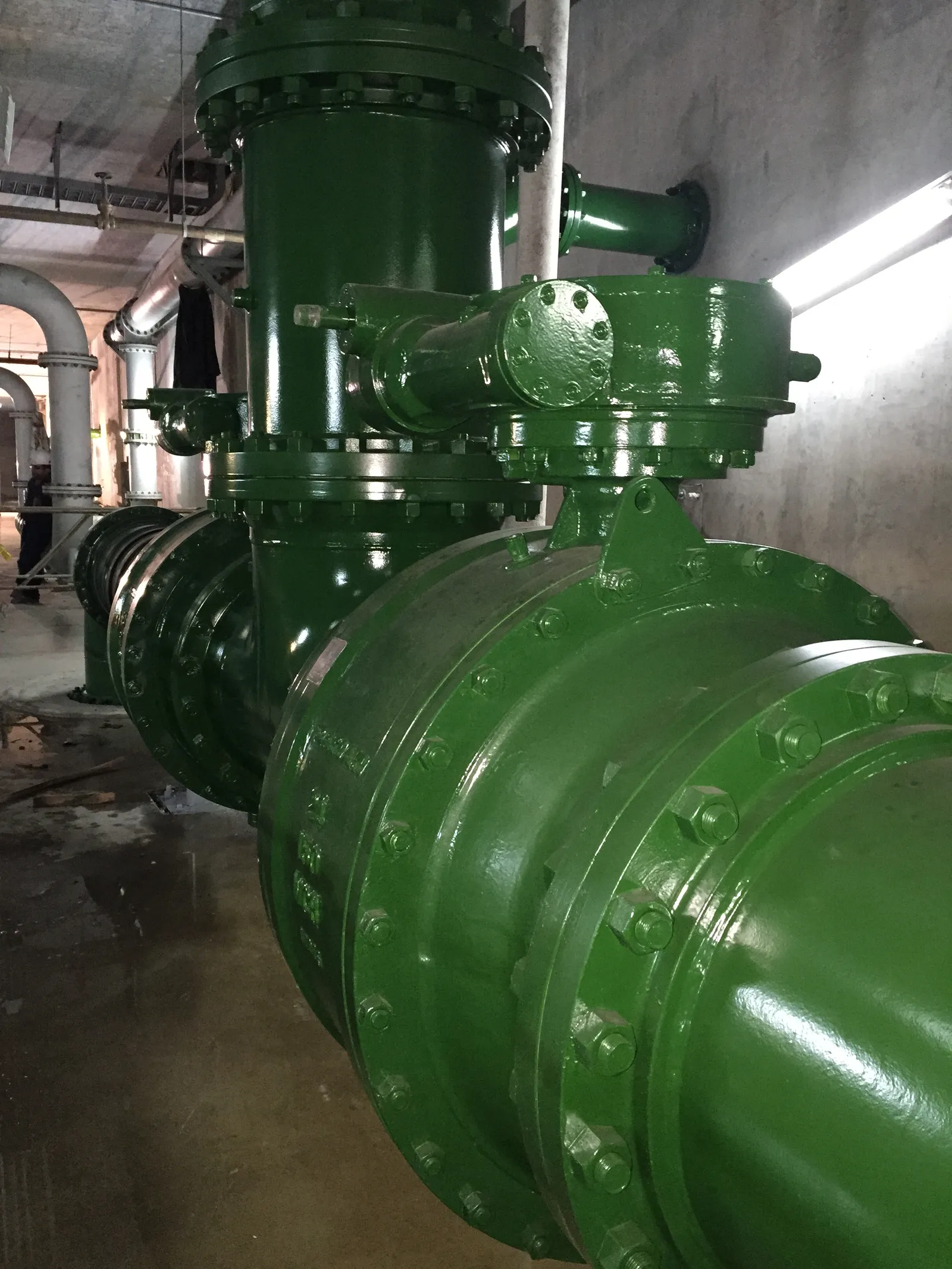
Beyond the seal, each valve body was protected for permanent immersion and humid service, not with standard painting: white-metal blast surface preparation (SSPC-SP5); a high-build epoxy system as base with a polyurethane topcoat; and an internal Buna-N lining that isolates the body from direct contact with raw river water.
Target dry-film thickness was ≥ 16 mils DFT for permanent immersion and ≥ 12 mils DFT for humid service, with color coding by fluid per standard (COVENIN 253) approved by Corpoelec, and verification by adhesion (ASTM D4541 pull-off), preparation (ISO 8501-1) and thickness (SSPC-PA2). The result is an anti-corrosion and immersion barrier sized to the real Caroní environment, with measurable, traceable thickness and adhesion.
Quality assurance and independent verification
Permanent equipment in a hydroelectric plant is demonstrated, not declared. The supply was executed under an Inspection and Test Plan (ITP) with multi-layer verification: pressure tests per API 598 / ISO 5208 — shell test at ≥ 1.5 × the rated pressure, closure tightness test (bubble-tight / zero leakage) and backseat test; design and sizing to ASME B16.34 (pressure-temperature), ASME B16.10 (face-to-face), API 600 for gate valves and MSS SP-55 casting visual examination.
Verification ran on two independent fronts: a third-party inspection body reviewed the valve packages before dispatch, and the client's engineering (Corpoelec – SOE) inspected on site, step by step — material selection, coating and testing — with technical support during installation, commissioning and start-up coordinated with the consortium's detail engineering.
After-sales service: the 2014–2015 in-service inspections
A supply of this kind does not end at dispatch. In 2014 and 2015, ITS de Venezuela — ACD America's engineering subsidiary — carried out the first inspections of the installed trunnion ball valves in the 16", 24" and 36" sizes: the critical ones, where the hardfacing does the hardest work against Caroní sediment. The inspections verified that the hardfaced seats and the tungsten-carbide-coated balls remained in optimal condition after installation.
That work was after-sales service performed on behalf of ACD America Corp, as the company that had supplied the equipment — ITS acting in consequence, on the ground, for the valves ACD sold. It is the reason ACD's knowledge of this plant's process valves is not documentary but first-hand: the same group that specified and supplied them went back to see how they were holding up.
Technical advantages of the approach
Five advantages define the supply: it was the project's largest process-valve package, executed to the Corpoelec/Edelca specification; it integrated three world-class factories (Datian, ZYI Xuanda, Crane) under a single technical coordination; it reinforced durability with tungsten-carbide and Alloy 6 hardfacing where abrasive service demands it; it applied environment-specific protection, addressing corrosion and erosion separately and with measurable thickness; and it carried traceability and verification by third party and by the client's engineering, from factory to commissioning.
Represented manufacturers & end user
- Datian Represented manufacturer — trunnion ball & gate valves
- ZYI Xuanda Represented manufacturer — resilient-seated butterfly valves
- Crane Represented manufacturer — bronze auxiliary valves
- ITS de Venezuela In-service inspections 2014–2015 — ACD America engineering subsidiary
- Corpoelec / Edelca ↗ End user (client)
Frequently asked questions
Why tungsten carbide and Alloy 6 on the trunnion ball valves?
Because Caroní water carries suspended solids; a hard coating (≥ 60 HRC, 200 µm) resists erosion and extends the life of the sealing surfaces, roughly doubling estimated service life versus a standard ion-nitrided ball.
Why resilient seats in the butterfly valves?
Because they deliver Class VI (0% leakage) shutoff — needed to isolate circuits during maintenance — and are compatible with the service water.
Under which standards were the valves tested?
Design and testing per API 600 / API 598, pressure-temperature per ASME B16.34, face-to-face per ASME B16.10, tightness per ISO 5208 and visual examination per MSS SP-55; coating was controlled per SSPC, ISO 8501-1 and ASTM.
Who verified quality?
An independent third-party inspection body and the client's engineering (Corpoelec), with on-site inspection throughout the process.
A demanding valve service of your own?
Tell us the process, the fluid and the duty — our application engineers help specify, source and verify the right valves for severe service.